
Consider T40Pro for battery changes in the field
Two removable batteries and support for hot-swapping give you a battery-exchange workflow. Include spare batteries and the charging cradle in your equipment plan.
Select a language to view TOKNAV information.
This resource is available in English.
GNSS RTK RECEIVERS
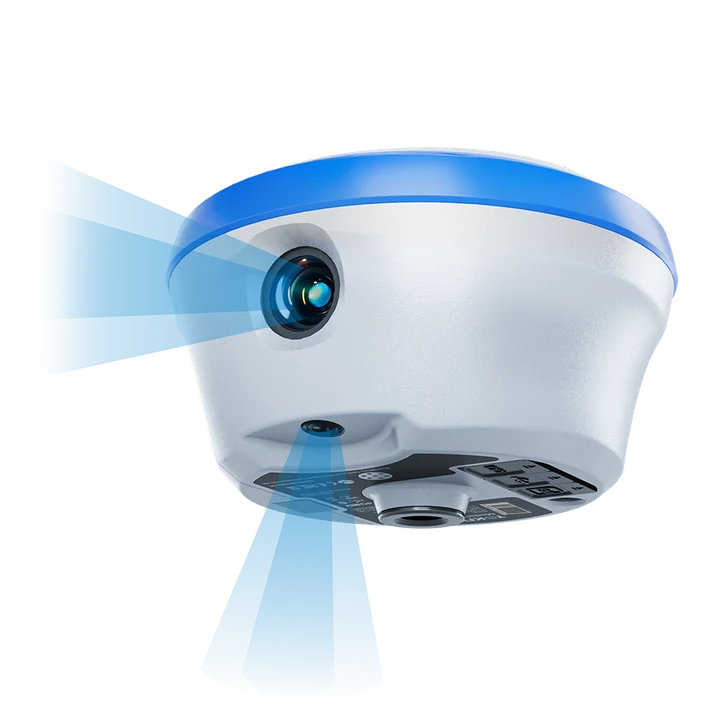
Both receivers support image-based surveying, IMU tilt measurement and AR stakeout. The practical choice here is the battery arrangement, body size and equipment your crew takes into the field.

THE PRACTICAL DIFFERENCES
Two removable batteries and support for hot-swapping give you a battery-exchange workflow. Include spare batteries and the charging cradle in your equipment plan.
The datasheet lists a smaller Ø132 × 83 mm body and Type-C charging. Review how you will recharge the receiver between shifts and power the rest of the kit.
| Selection point | T40Pro | T50Pro |
|---|---|---|
| Field workflow | Image-based survey, IMU tilt measurement and AR stakeout | Photogrammetric RTK, IMU tilt measurement and AR stakeout |
| Power arrangement | Two removable 7.2 V, 3400 mAh batteries; supports hot-swapping | 7.4 V, 6800 mAh rechargeable battery; Type-C charging |
| Receiver dimensions | Ø160 × 103 mm | Ø132 × 83 mm |
| Weight as specified | 850 g without batteries | 770 g in the datasheet |
| Protection rating | IP68 | IP68 |
| Listed accessory items | Two external batteries, charging cradle and radio antenna | Type-C power adapter, Type-C cable and radio antenna |
| Selection consideration | Plan battery exchange during field work | Plan around the smaller body and Type-C charging |
Swipe to view all columns.
Weights use each document’s stated basis: the T40Pro figure excludes batteries. Do not treat these as an identical, fully equipped kit comparison. Accessories listed in a datasheet should be checked against the final quotation. Runtime depends on work mode and conditions.
Specifications checked against the following product documents on 3 November 2026.
COMPLETE YOUR CONFIGURATION
For CORS / NTRIP, confirm service coverage, credentials, mobile connectivity and coordinates. For a local base, specify the base receiver, radio protocol, antenna and power supply.
Plan an RTK + CORS/VRS configuration →Include the receiver quantity, controller, field-software licence, pole, radio, charger, batteries and case. Share any equipment you already own so compatibility can be reviewed.
Review product tests and workflows →SELECTION QUESTIONS
Yes. The linked T40Pro and T50Pro datasheets describe image-based survey, IMU tilt measurement and AR stakeout. Confirm the controller and field-software configuration for the intended workflow.
T40Pro uses two removable 7.2 V, 3400 mAh batteries and supports hot-swapping. Confirm the included batteries, charger and any spare-battery requirement in the quotation.
The T40Pro datasheet states 850 g without batteries; the T50Pro datasheet lists 770 g. Because the stated bases differ, confirm the weight of each complete working kit before comparing carrying loads.
Use the list to plan the kit, then confirm the receiver, controller, software licence, batteries, charger, radio, pole and case in an itemised quotation.
Check the country of use, correction method, coordinate system, radio compatibility, field software and handover requirements. A CORS rover and a local base-and-rover setup need different supporting equipment.
LET’S PLAN YOUR EQUIPMENT
Share your country, application and correction source. We can review the receiver, controller, software and accessories for your work.
Help me choose a receiver