
Consider T20Pro for its radio and display
Review T20Pro when adjustable radio output up to 5 W and an on-device screen fit your field setup. Confirm permitted frequencies, compatible equipment and the planned base or rover configuration.
Select a language to view TOKNAV information.
This resource is available in English.
GNSS RTK RECEIVERS
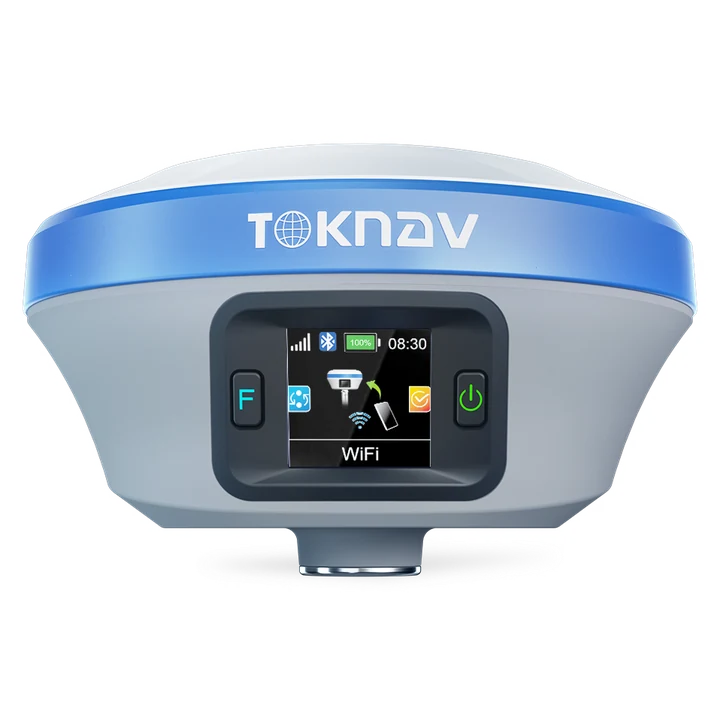
Compare T20Pro’s adjustable 1 / 2 / 5 W radio and built-in display with T10Pro’s lighter body and 0.5 / 1.5 W radio. Both offer GNSS RTK and IMU tilt measurement; choose around the correction link and equipment your crew needs.
THE PRACTICAL DIFFERENCES
Review T20Pro when adjustable radio output up to 5 W and an on-device screen fit your field setup. Confirm permitted frequencies, compatible equipment and the planned base or rover configuration.
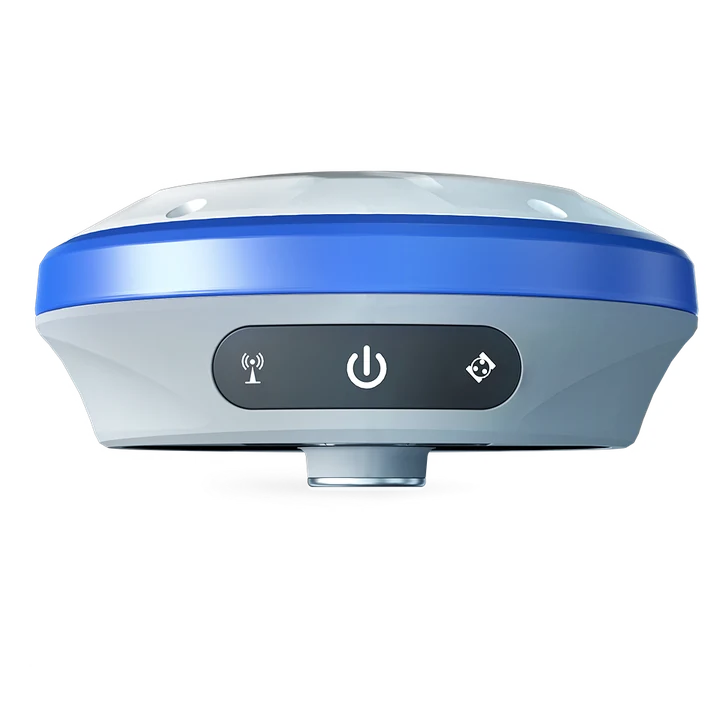
Review T10Pro when a 740 g receiver and its listed 0.5 / 1.5 W radio fit the job. Check the complete correction link, controller and charging plan before choosing the kit.
| Selection point | T20Pro | T10Pro |
|---|---|---|
| Integrated radio output | 1 W / 2 W / 5 W | 0.5 W / 1.5 W |
| Radio frequency band | 410–470 MHz | 410–470 MHz |
| On-device status interface | 1.3-inch TFT LCD, 240 × RGB × 240 | Power, satellite and data-link indicators |
| GNSS channels | 1408 | 1408 |
| GNSS RTK accuracy (RMS) | Horizontal ±(8 mm + 1 ppm); vertical ±(15 mm + 1 ppm) | Horizontal ±(8 mm + 1 ppm); vertical ±(15 mm + 1 ppm) |
| IMU tilt specification | Less than 2 cm within 60° | No more than 2 cm within 60° |
| Battery | 7.4 V, 6500 mAh | 3.7 V, 9600 mAh |
| Published operating time | More than 18 h typical rover / GSM; 26 h static | More than 16 h typical rover / GSM; 24 h static |
| Receiver dimensions | Ø143.5 × 90.7 mm | Ø147.9 × 68 mm |
| Weight as specified | 900 g | 740 g |
| Protection rating | IP68 | IP68 |
Swipe to view all columns.
Radio power does not by itself establish working range: antenna placement, terrain, interference, protocol compatibility and local rules all matter. Battery capacities have different voltages, so mAh figures alone are not an energy comparison. Operating times are published mode-specific figures, not guaranteed shift lengths. Confirm the supplied configuration for your country.
Specifications checked against the following product documents on 4 November 2026.
COMPLETE YOUR CONFIGURATION
For CORS / NTRIP, confirm service coverage, credentials, mobile connectivity and coordinates. For a local base, specify the base receiver, radio protocol, antenna and power supply.
Plan an RTK + CORS/VRS configuration →Include the receiver quantity, controller, field-software licence, pole, radio, charger, batteries and case. Share any equipment you already own so compatibility can be reviewed.
Review product tests and workflows →SELECTION QUESTIONS
The published differences include radio power, on-device display, battery arrangement, body dimensions and weight. T20Pro lists up to 5 W radio output and a TFT display; T10Pro lists up to 1.5 W and weighs 740 g.
No. Usable range depends on terrain, antennas, interference, compatible settings and local frequency and power limits. Review the complete base-to-rover connection and verify it under your site conditions.
The linked datasheets list the same horizontal and vertical GNSS RTK RMS figures for these models. Select the radio, display, power and handling arrangement for the work instead of using the model number as an accuracy ranking.
Its battery is rated at a different voltage. Compare voltage and capacity together, and keep each stated operating time with its work mode. Actual runtime also depends on communications, temperature and equipment settings.
Both datasheets list cellular connectivity and rover / GSM operating conditions. Confirm the local service, mobile bands, correction formats, controller and field software for the proposed network workflow.
Include your country, survey task, preferred corrections, expected radio environment and existing controller or base equipment. State whether you need a rover-only or complete base-and-rover configuration.
LET’S PLAN YOUR EQUIPMENT
Share your country, application and correction source. We can review the receiver, controller, software and accessories for your work.
Help me choose a receiver