
A compact RTK receiver is a good choice only when its size supports the workflow without creating compromises in correction access, battery life, controller use, mounting, antenna or field robustness.
What to check before choosing a workflow
- List the pole, poleless, GIS or controller workflow.
- Confirm correction, radio or mobile-data requirements.
- Compare battery, mounting, accessories and all-day operating needs.
Is the smallest RTK receiver always the best choice for field work?
No. Select a compact receiver only after checking the full workflow: correction method, controller, battery, mounting, antenna, accessories, environmental conditions and the required data output.
Compact RTK receivers: choose the correction path first
A compact receiver should fit both the survey task and the equipment carried into the field. Compare the complete working arrangement: receiver, pole or mount, controller, correction connection and power. Receiver size alone does not establish measurement quality, and this guide does not establish a market-wide “smallest” ranking.
T5 and T5Lite: similar size, different documented radio information
The current T5 and T5Lite comparison lists an internal receive-only UHF radio for T5. T5Lite’s linked datasheet does not list an internal UHF radio specification. That omission is not proof of external-radio compatibility. Confirm the actual correction path before taking either receiver to a site without mobile data; do not treat T5’s receive-only radio as a base transmitter.
T50 and T50Pro: distinguish the measurement method
T50 supports green-laser point measurement, while T50Pro supports image-based surveying. Both list IMU tilt measurement and AR stakeout. Review the current T50 versus T50Pro comparison for the conditions attached to each method. A laser module’s maximum range is not an accuracy statement for every target at that distance.
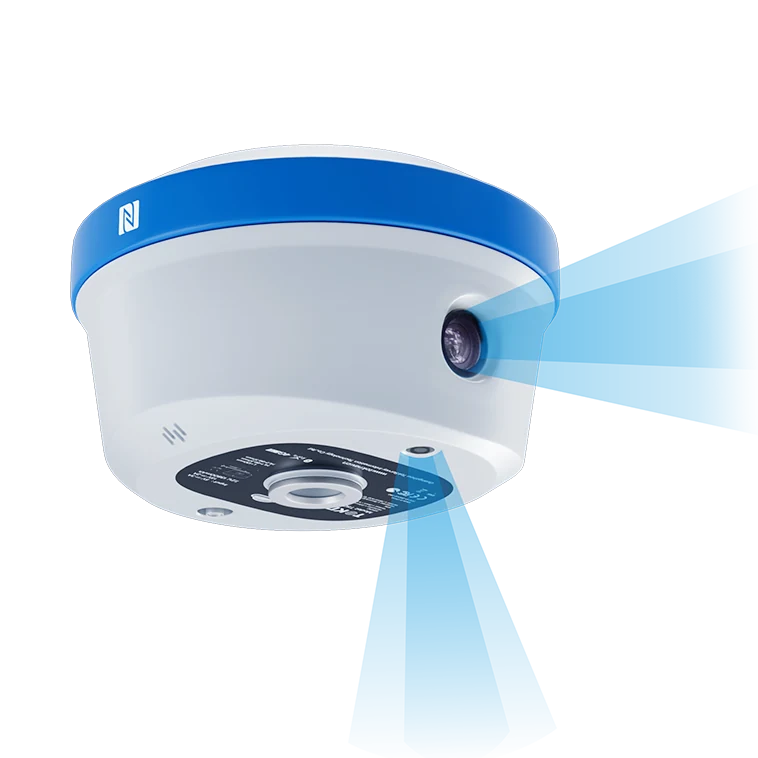
Check portability in the actual field configuration
During a representative trial, use the intended controller, mounting and correction source. Check whether the working arrangement remains practical when collecting points, changing locations and managing power. A published receiver weight does not describe every item the operator carries.
Check observations against independent project control and retain the coordinate profile and field records. Trees, buildings and reflective surfaces can affect GNSS observations; compact size, channel count or tilt compensation does not remove those constraints. If a point cannot be checked using the intended method, select a separately validated alternative.
Use the RTK receiver selection guide to match the measurement method to the site. Confirm current model documents, enabled functions and service compatibility for the supplied configuration. Certification, operating-time and accuracy statements should remain specific to their documented model and conditions.
Request a private compact-receiver configuration review with your work region, correction source, field software and required tasks.