HYDROGRAPHIC USVS

TBoat10 vs TBoat20: match the vessel to your survey

Choose a USV around the sensor package, access to the water and how your crew will launch and recover it. TBoat10 has the smaller hull and lower listed handling weight; TBoat20 provides a higher published payload rating. Check the exact sensor and battery configuration for your mission.

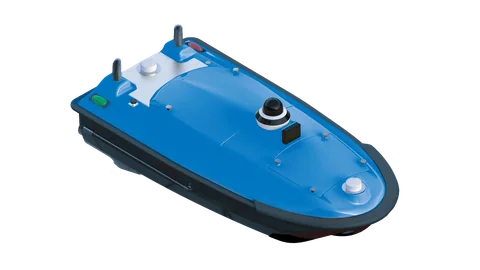
TOKNAV TBoat10 hydrographic USV
TBoat10
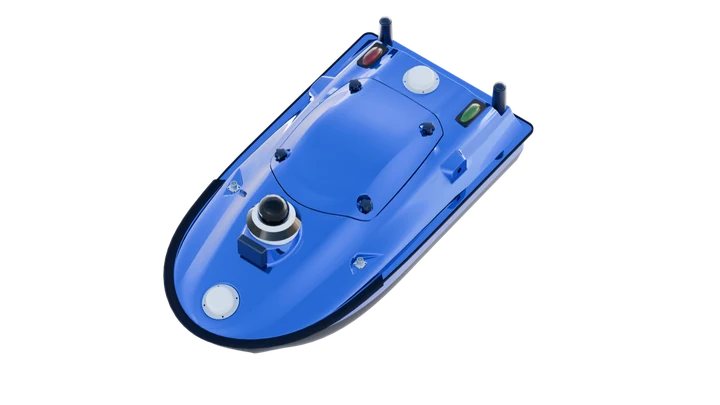
TOKNAV TBoat20 hydrographic USV
TBoat20

THE PRACTICAL DIFFERENCES

Compare the field workflow

Consider TBoat10 for compact transport and handling

Start with TBoat10 when its 35 kg published payload rating fits the planned equipment and the smaller hull suits your transport and launch arrangements. Assess the full working package and crew handling requirements.

Consider TBoat20 for a higher payload requirement

Start with TBoat20 when the project needs its 50 kg published payload rating. Include the larger hull, higher listed total weight, payload mounting and recovery arrangements in the selection.

TBoat10 vs TBoat20 — published specifications and selection points
Selection pointTBoat10TBoat20
Hull dimensions980 × 520 × 254 mm1280 × 580 × 430 mm
Hull weight7 kg12 kg
Total weight stated in the datasheet30 kg including base peripherals, boat controller and battery40 kg including base peripherals, boat controller and battery
Maximum payload rating35 kg50 kg
Draft as specified8.5 cm10 cm
Rated motor power900 W1100 W
Battery arrangementTwo 33.6 V, 25 Ah rechargeable batteries; hot-swap replacement supportedTwo 33.6 V, 25 Ah rechargeable batteries; hot-swap replacement supported
Published endurance at stated speeds3 h at 2 m/s; 7 h at 1.5 m/s3 h at 2 m/s; 7 h at 1.5 m/s
Maximum speed as specified7 m/s6 m/s
Protection ratingIP67IP67
Depth sensor listed in the datasheet200 kHz; 8° beam; 0.15–200 m depth range200 kHz; 5° ±1° beam; 0.15–200 m depth range
Published depth accuracy±1 cm + 0.1% of water depth±1 cm + 0.1% of water depth

Swipe to view all columns.

Payload rating is not a guarantee that any sensor package can be fitted: check mass distribution, mounting, power, draft and stability. The stated total weights use the datasheet’s equipment basis, so confirm the delivered package. Endurance depends on speed, payload, current and conditions; maximum speed is not a recommended survey speed. Depth figures describe the listed sensor configuration and require appropriate installation, sound-velocity settings and field checks.

Check the official datasheets

Specifications checked against the following product documents on 4 November 2026.

COMPLETE YOUR CONFIGURATION

Plan the complete hydrographic survey system

Confirm payload and depth measurement

Check sensor mass, mounting, power, draft, sound-velocity settings and required data output. Confirm the exact echo sounder supplied with the vessel.

Explore hydrographic survey equipment →

Prepare launch, corrections and recovery

Review access to the water, crew handling, GNSS corrections, communications and recovery procedures. Validate the complete setup before routine survey work.

Plan a hydrographic workflow →

SELECTION QUESTIONS

TBoat10 vs TBoat20 FAQ

What is the main selection difference between TBoat10 and TBoat20?

TBoat10 is the smaller platform, with a 35 kg published payload rating. TBoat20 has a larger hull and a 50 kg rating. Consider payload integration together with transport, crew handling, launch access and recovery.

How should I interpret the hull and total weights?

The datasheets separate hull weight from a total that includes base peripherals, the boat controller and battery. TBoat10 lists 7 kg and 30 kg respectively; TBoat20 lists 12 kg and 40 kg. Ask for the exact delivered and working-package weights before planning handling.

Will either vessel always operate for seven hours?

No. Both datasheets associate seven hours with 1.5 m/s and three hours with 2 m/s. Actual endurance also depends on payload, current, wind, battery condition and the operating procedure.

Does TBoat20 automatically measure depth more accurately?

The linked datasheets give the same depth-accuracy expression for their listed sensor configurations. Beam angles differ, so review the required coverage, water conditions, sensor setup and survey procedure instead of using hull size as an accuracy ranking.

Are the listed echo sounder and other sensors included in every quotation?

Confirm the supplied sensor, mounting, positioning equipment, batteries, controller, software and accessories in an itemised quotation. A platform’s datasheet does not define every project-specific package.

What information should I send for a hydrographic configuration?

Include your country, water body, area, expected depths, current and access conditions, planned payload, positioning corrections and required deliverables. Describe how the crew will transport, launch and recover the vessel.

LET’S PLAN YOUR EQUIPMENT

Tell us about your water-survey project

Share your country, water body, depth range, sensor payload, survey area and launch conditions. We can review the vessel, positioning and data-collection configuration.

Plan my USV configuration