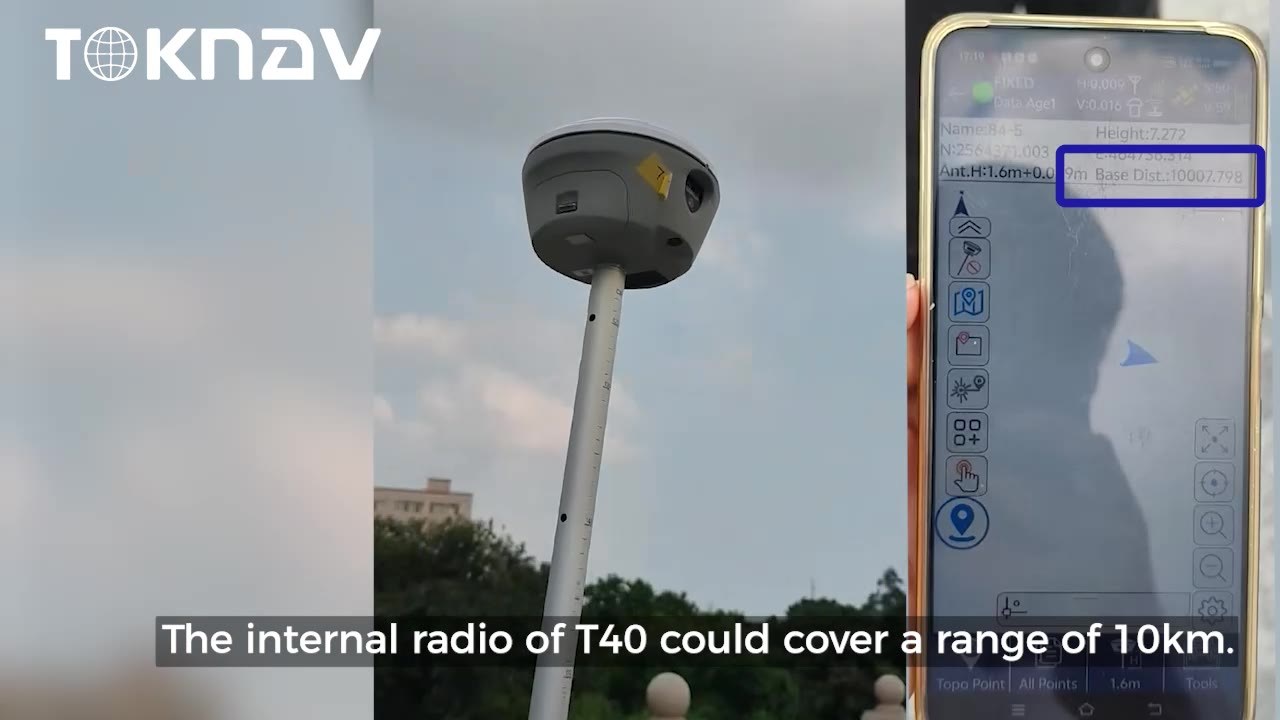
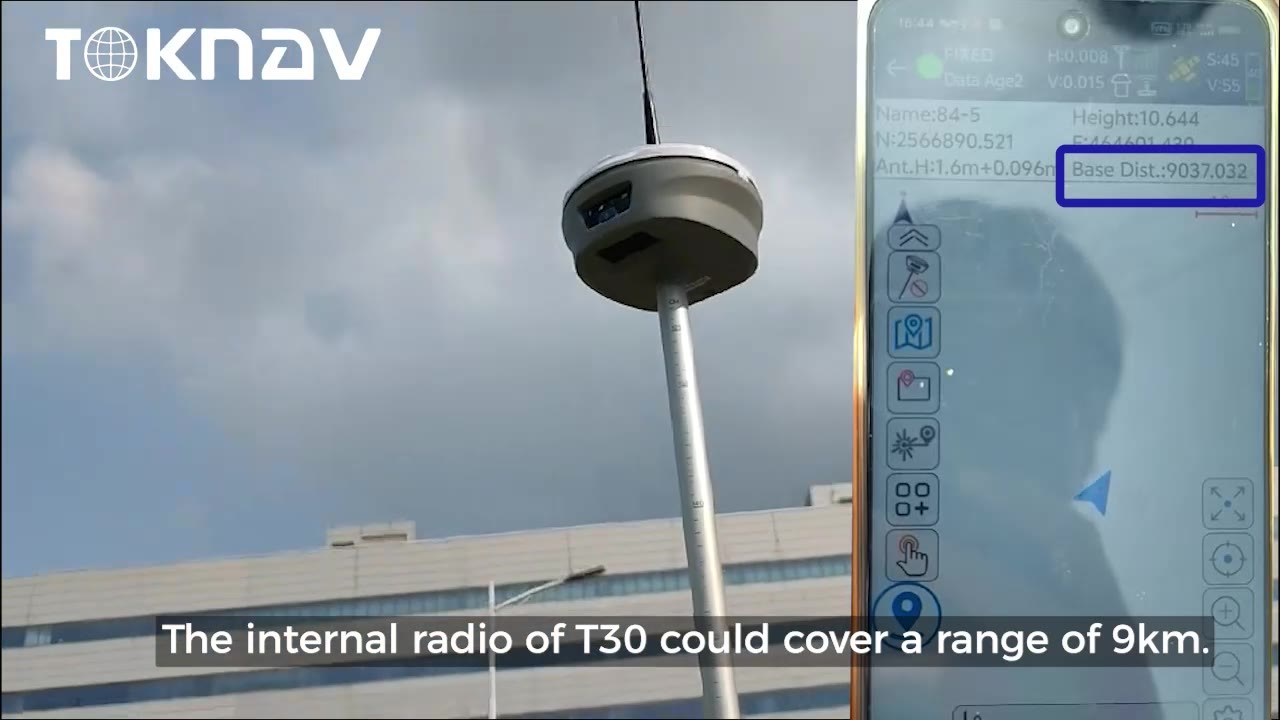
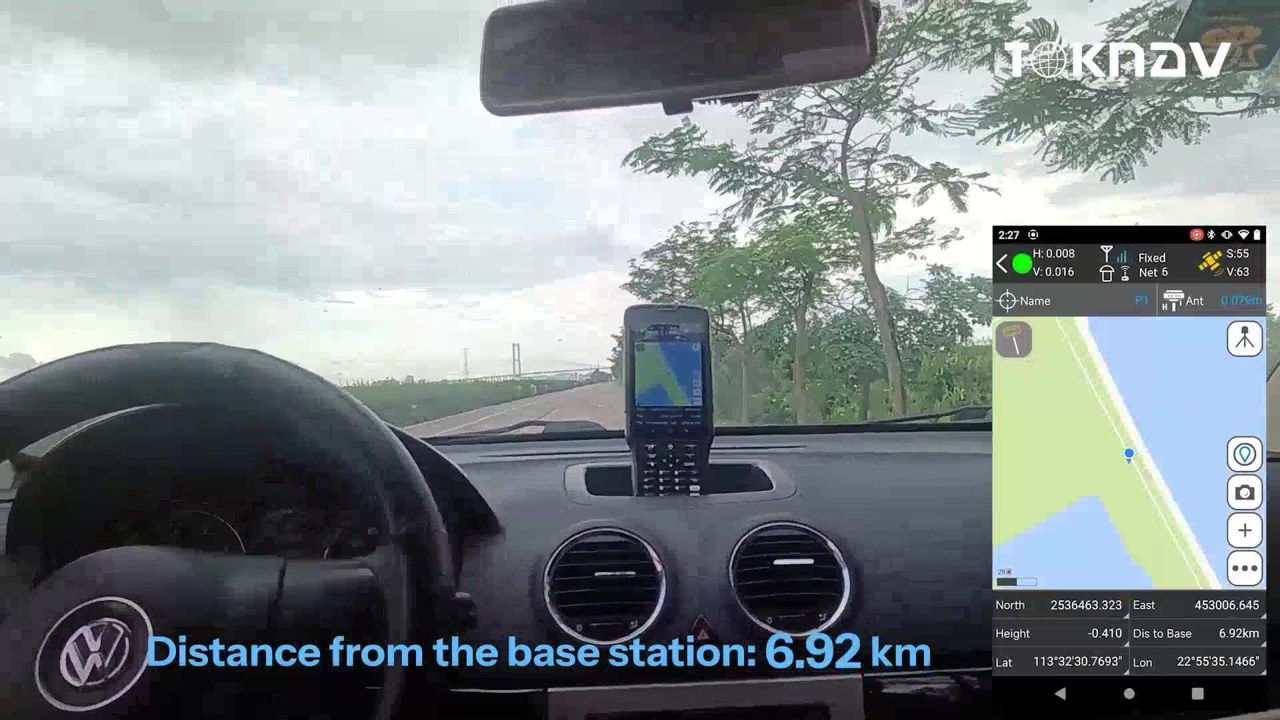
There is no universal RTK range number. Improve a local-base workflow by reviewing antenna height, line of sight, radio settings and terrain; use network RTK where dependable correction coverage is a better fit.
What to check before choosing a workflow
- Inspect terrain, obstructions and antenna placement before changing equipment.
- Monitor correction age and fixed-solution stability during the test.
- Compare radio coverage with network RTK coverage at the actual work area.
Does a more powerful radio alone solve RTK range problems?
Not necessarily. Terrain, antenna height, obstructions, interference, correction settings and the required accuracy all affect a usable RTK workflow. Test the complete link in the actual field environment.
Increase usable RTK coverage by testing the whole correction link
To increase RTK range, first identify whether the limit is radio communication, correction delivery or the GNSS measurement environment. A radio link can carry data while the rover still fails the survey tolerance. Higher transmitter power alone does not establish a reliable working radius.
1. Separate the symptoms
| Field symptom | Checks to record | Next decision |
|---|---|---|
| Corrections stop as the rover moves away | Terrain profile, antenna placement, obstructions, cable condition and correction age. | Test a clearer base/antenna position before replacing equipment. |
| Corrections never arrive, even nearby | Matching protocol and channel, serial settings, connection cable and compatible correction format. | Resolve the configuration mismatch before a distance trial. |
| Corrections arrive but the rover floats or fails control | Satellite view, nearby reflective surfaces, base coordinates, reference system and observation procedure. | Investigate positioning quality rather than assuming radio power is the fault. |
| The planned area has uneven radio coverage | Known weak locations, safe base positions and available mobile-data/correction services. | Compare an additional base setup or a supported network RTK workflow. |
Swipe to view all columns.
2. Prepare an external-radio kit around the actual receivers
For the TOKNAV DL8635 external digital radio, ask for the current datasheet and a written compatibility check for the base, rover, firmware, protocol and cables. Itemise the radio, suitable antenna, mounting, power supply, charger and spares. Confirm locally permitted radio settings with the supplier for the destination market.
Do not translate a published maximum range into a site guarantee. Antenna installation, terrain and interference change the usable link; a range demonstration must also record the equipment configuration and field conditions.
3. Run a repeatable site trial
- Set the base on suitable control and verify the project reference and antenna heights.
- Check a nearby known point before the range trial. Record the base, rover, radio settings and batteries.
- Visit representative open and obstructed areas. Log correction age, solution status, interruptions and independent check differences.
- Repeat problem locations after changing one factor at a time, such as antenna position.
- After an interruption or configuration change, recheck control before resuming production measurements.
NOAA NGS real-time positioning guidance describes the importance of known-point checks. Its guidance is a reference for survey procedure, not a product range certificate.
When should you consider CORS or network RTK?
Where an appropriate service and mobile connection cover the work area, network RTK may avoid a long local-radio link. Confirm service coverage, compatible corrections, project reference and subscription costs. Compare the base-radio and network coverage options before changing the kit.
What determines the cost of an RTK range upgrade?
Compare complete configurations: radio and accessories, installation, power, extra base equipment if needed, subscriptions and training. Send your country, existing receiver models, intended work area and observed failure symptoms for a radio or network configuration review.