What is GNSS? A Simple Guide to Global Navigation Satellite Systems | TOKNAV

What Is GNSS?

GNSS stands for Global Navigation Satellite System. It is a large network of satellites that circle Earth and send location signals down to our devices. You use GNSS every single day without even noticing it—think phone maps, delivery tracking, and even some navigation tools. This guide explains GNSS in simple, easy-to-understand words. We also show you why TOKNAV GNSS receivers are such a great choice for anyone needing reliable positioning.

What Does GNSS Stand For?

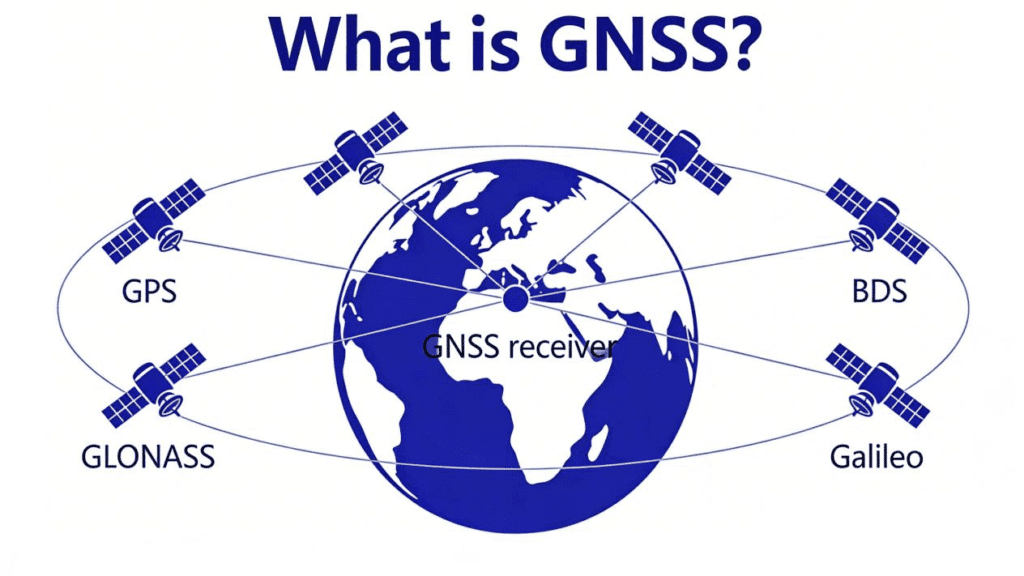
GNSS means Global Navigation Satellite System. Importantly, it is not just one single system. Instead, it includes all the global satellite navigation networks around the world. Many people often confuse GNSS with GPS. To put it simply, GPS is only one small part of the much larger GNSS family.

Main GNSS Systems

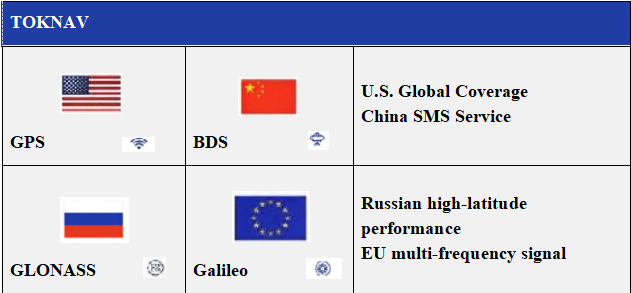
Several different satellite systems work together to make up the GNSS network. First, GPS comes from the United States and is one of the most well-known systems. Next, BDS is China’s own global navigation system, designed for worldwide use. Then, GLONASS is the satellite system from Russia, built to work well in northern areas. Finally, Galileo is a system built by the European Union, focused on high accuracy for everyday users. These systems together improve coverage and accuracy all over the world.

How Does GNSS Work?

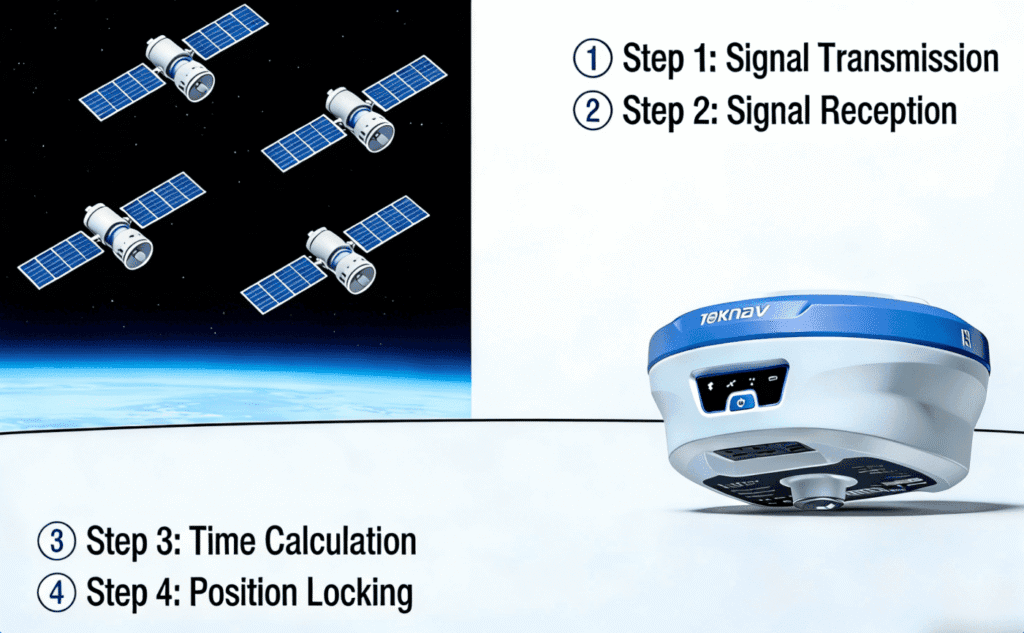
GNSS works in a few simple, easy steps. First, satellites high up in space send out clear signals. A GNSS receiver (like those from TOKNAV) picks up these signals from the satellites. It then measures how long each signal takes to travel from space to the receiver. After that, it uses this time to calculate your exact location on Earth. Most devices need at least four satellites to get a good position. More satellites mean better, more accurate positioning results.

Why High Accuracy Matters

The GPS on your phone works well for daily tasks like finding a café or driving directions. However, professional jobs need much better precision to get things right. For example, surveyors and farmers need centimeter-level accuracy to do their work properly. Normal phone GPS cannot meet this high need. Special tools like RTK technology help fix signal errors and boost accuracy. A strong, high-quality receiver makes this level of precision possible.

Common Uses of GNSS

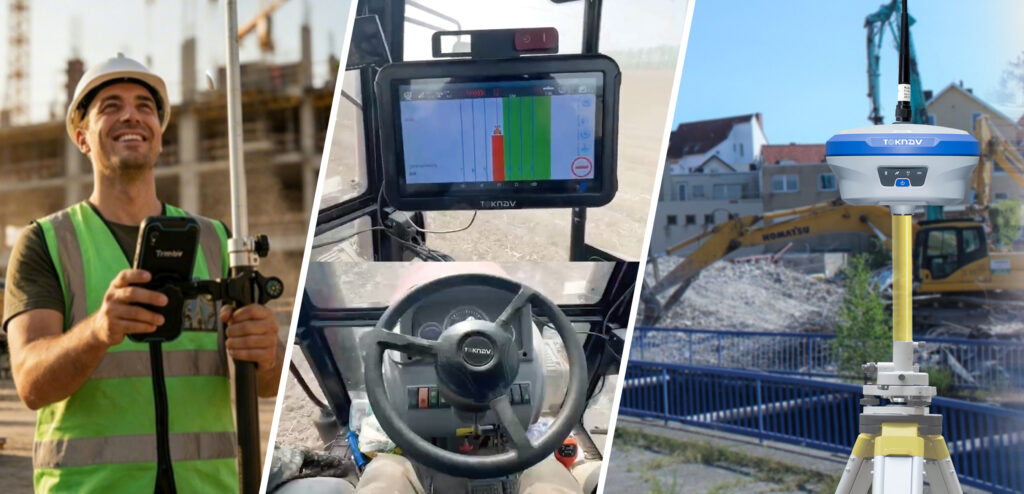
GNSS helps many different industries get their work done every day. First, surveyors use it to measure land boundaries and map areas accurately. Then, farmers use it for smart farming tools to plant and harvest crops more efficiently. Next, ships and planes rely on it to navigate safely across oceans and skies. Also, construction teams use it for precise building plans and layout work. Finally, emergency services use it to find people in need and save lives quickly.

Why Choose TOKNAV GNSS Receivers?

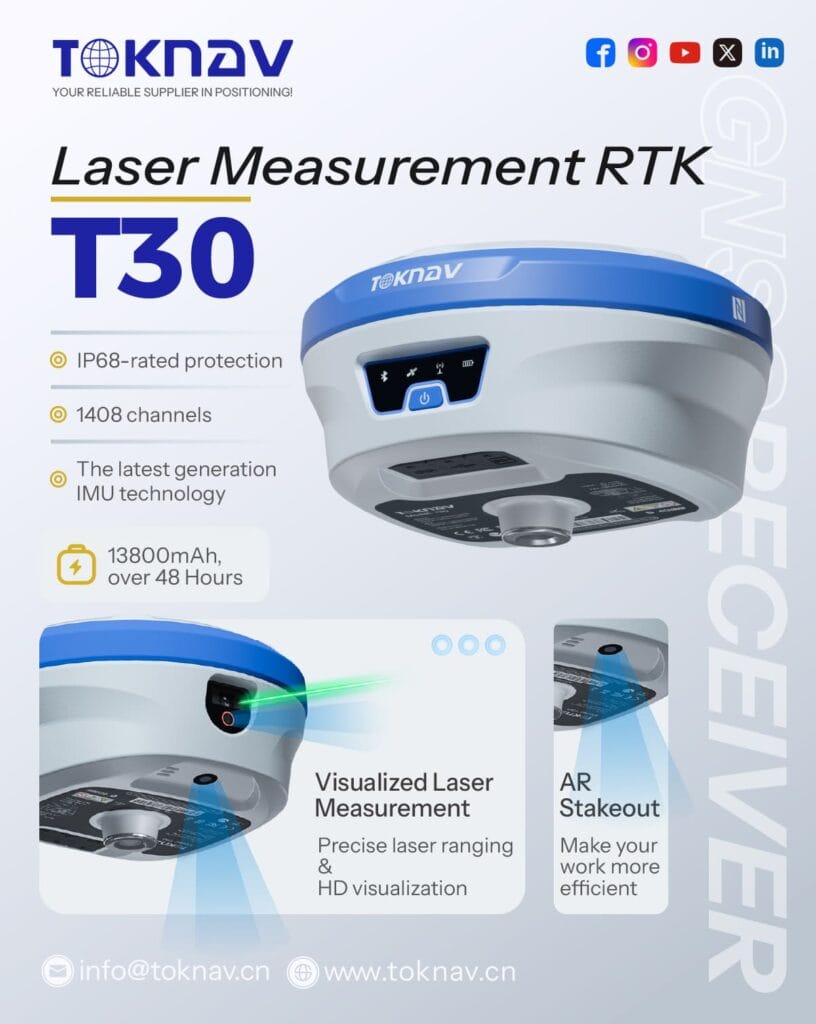
TOKNAV makes professional GNSS receivers built for real-world use. These receivers support all the major satellite systems, so they get the best possible signal. They provide fast, stable positioning that you can trust. In addition, they offer the centimeter-level accuracy that professionals need. They also work well in tough outdoor environments, like construction sites or remote farms. Moreover, TOKNAV receivers are durable, long-lasting, and easy to use—even for people new to GNSS tools. They fit perfectly for surveying, mapping, and all kinds of field projects.

Common GNSS Misunderstandings

Many people have wrong ideas about GNSS that can cause confusion. First, GNSS is not the same as GPS—GPS is only one small part of the bigger GNSS network. Second, GNSS works best when used outdoors, because tall buildings or thick trees can block its signals. Third, not all GNSS receivers are equally good. Cheap, low-quality tools often have weak signals and low accuracy. Professional receivers like those from TOKNAV are much more reliable and deliver better results every time.

The Future of GNSS

GNSS technology keeps getting better and more advanced every year. New satellites are launched regularly, giving stronger and clearer signals to devices on Earth. New software updates also make positioning faster and more precise than ever before. Soon, GNSS will work even better with AI and smart devices. It will power self-driving machines, smart cities, and more advanced tools. To keep up with this future, you need a trusted GNSS partner. TOKNAV keeps making better, more reliable GNSS receivers to meet these new needs.

Final Thoughts

GNSS is the foundation of modern positioning technology. It helps people work, travel, and create things safely and efficiently every day. Understanding what GNSS is and how it works helps you pick the right tools for your needs. For anyone needing high accuracy, choosing a strong, reliable GNSS receiver is key. TOKNAV GNSS receivers bring the quality and stability that professionals depend on. They are built for real, hard professional work, no matter the environment. Visit toknavgnss.com today to learn more about TOKNAV’s products and how they can help you.

SEO Meta Description (Copy Directly for Use)

Want to know what GNSS is? This simple guide explains GNSS meaning, how it works, and common uses. Discover why TOKNAV GNSS receivers offer great accuracy for surveying, mapping, and industry.

TOKNAV küresel distribütörü olun!

Ölçme sektöründe kanıtlanmış bir geçmişe sahip olarak, şimdi küresel başarı hikayemize katılacak tutkulu distribütörler arıyoruz.